Saturday, August 23, 2008

Guess the Poo


The following quiz comes from "Adventures in Ethics and Science", of all places.

For each of the following dung samples,

(1) what is the animal that produced it,

and

(2) what facts about the animal (in terms of its diet, digestive system, etc.) helped you identify it as the source of the pictured scat


Let's try an easy one first.


What is it about those scats that makes you think they come from an elephant?


Now use that same logic to identify the culprits of these beauties:


Thursday, August 21, 2008

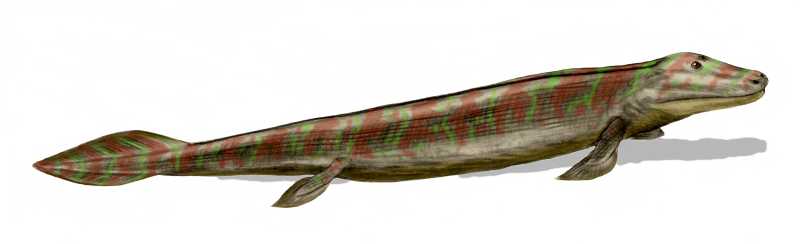
The 375 Million Year Old Rose of Tiktaalik

In 2006 an incredible fossil discovery was made of a very important "missing link" - one of those transitional fossils that help scientists piece together major developments in the evolutionary history of life on Earth.

In this case, the fossil was Tiktaalik roseae, an extinct species of sarcopterygian fish. The Sarcopterygii are the lobed-finned fish, an ancient group of fish that are survived today by the lungfish and the "living fossil", the coelacanth, as well as you and me and all other tetrapods. Note the family resemblance...

The University of Chicago has an amazing site that explores the fossil and the science of palaeontology.

Here is an interview with one of the scientists who hunted, located and extracted this muscular fishapod. I recommend this for insights into exactly how one goes about finding fossils.


Saturday, August 16, 2008

What might and probably will happen when you die...

Thump the sky and celebrate life. Yes! I'm an organism on this planet. Fleeting as it may be, I will play my part in the forward tumble of generations. We are stepping stones for the leapfrogging double helix. But not all falls to ashes and dust.
Some things do not rot!

History must record our passing, since we will not end up in bogs, and our families or the police or the doctors will sign our last certificate.

Thursday, July 10, 2008

Further to the flatfish...


The very first image on this blog was a random choice that has now lead me to discover some fascinating information about this enigmatic fish.

Some background:

The flatfish are an order of bony fish called the Pleuronectiformes (meaning "side-swimmers" in Greek: pleuro = side + nektos = to swim). This order includes some important food fish, including the plaice, sole, halibut and flounder.
The young larval fish hatch out form the bouyant eggs and swim like normal fish. But then the amazing! The young fish settle to the bottom, on their sides, and their heads begin to twist around. The orbit (that's techno bone-speak for eye socket), with the eye in it, moves across the skull. The end result of this anatomical change is a rather laid-back fish, lying on the bottom, with two eyes on one side (the top side) of its face. It is easy to imagine the relief sighed at this evolutionary development as the grit no longer accumulated in the corner of the downward facing orb. Wink wink. In fact this is a spectacular adaptation to bottom-feeding, as the fish flounders along, chewing on brittle-stars, tube-worms and other benthic delicacies.

An American researcher (Matt Friedman) has analysed some fossil flatfish and found them to be intermediate in their degree of "eye migration" between upright fish and the modern flatfish, as shown by the diagram below:


(courtesy of the NY Times)

This clearly shows the gradual nature of the evolution of the modern flatfish form. But why? Lying on the side would precede and thus stimulate such an eye migration What pressures could result in early forms taking to the bottom in such an unfishlike way? Was this hoist upon them by an inability to swim? A deflated gas bladder (internal fish-floatie)?

One possible reason is constipation. The clogged intestinal tract of goldfish can press against their gas bladders and interfere with the inflation and deflation of the organ. This can be remedied with a pea and Daphnia puree, apparently. Sounds like a nice side-dish for whole deep-fried flounder to me.

Thursday, June 26, 2008

It's like I've got an extra memory...

because everything I want to remember about the web is right here, right now...


Tuesday, June 17, 2008

My next theme party

Even chemistry is more fun in Europe...

Monday, June 16, 2008

Elements

Found this classic song on a search of some science blogs. This one is for you, Justin!